American Football Betting: The Data-Driven Guide for UK Punters
 Available in US
By NFL Wagering Analyst

- The Five Numbers That Define NFL Betting for UK Punters
- Why American Football Betting Is Booming in the UK
- The NFL Betting Market in Numbers
- Why the NFL Is Britain’s Fastest-Growing Sport for Punters
- Core Bet Types in American Football
- Reading NFL Odds as a UK Bettor: Fractional, Decimal, and American
- Choosing a UK Sportsbook for NFL Markets
- Bankroll Management Fundamentals for NFL Bettors
- Strategy Snapshot: Where UK Punters Find Value
- UK Gambling Regulation and What It Means for NFL Bettors
- Responsible Gambling Resources for NFL Punters
- Frequently Asked Questions About American Football Betting
The Five Numbers That Define NFL Betting for UK Punters
- The global american football betting market is worth $8.52 billion and growing at 11.5% annually — this is no longer a niche pursuit.
- Over 13 million NFL fans in the UK, 68% aged 18-44, make this the fastest-growing sport for the country’s sportsbook operators.
- The average hold rate across regulated sports betting is 10.15% — understanding what the house keeps is the foundation of any viable staking plan.
- UK financial risk assessments now trigger at GBP 150 in net deposits over 30 days, down from GBP 500 — plan your deposit schedule before the season starts.
- Point spreads, totals, and moneyline form the core of NFL wagering. Master these three markets before touching props, accumulators, or teasers.
Why American Football Betting Is Booming in the UK
Nine years ago, I placed my first NFL bet from a flat in Brixton. The sportsbook had three markets for Monday Night Football — moneyline, spread, totals — and the odds were so thick with margin you could practically hear the bookmaker laughing. Today, that same fixture offers sixty-plus markets across half a dozen UK-licensed platforms, and the margins have tightened enough to make american football betting a genuinely viable pursuit for anyone willing to do the analytical work. Something shifted, and the numbers tell the story better than any anecdote.
$8.52 Billion
Global american football betting market value in 2025, projected to hit $9.5 billion in 2026
13+ Million
NFL fans across the United Kingdom — and growing every season
$30 Billion
Estimated legal handle on the 2025 NFL season in the US alone
86,152
Spectators at the Rams-Jaguars London game at Wembley in 2025
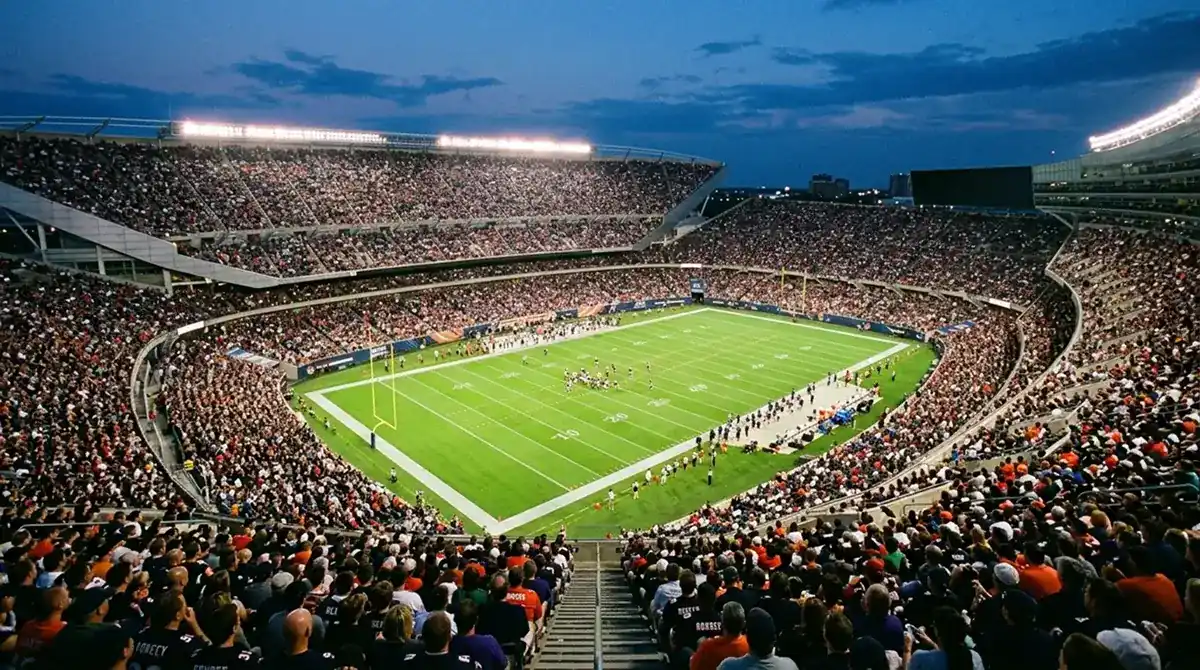
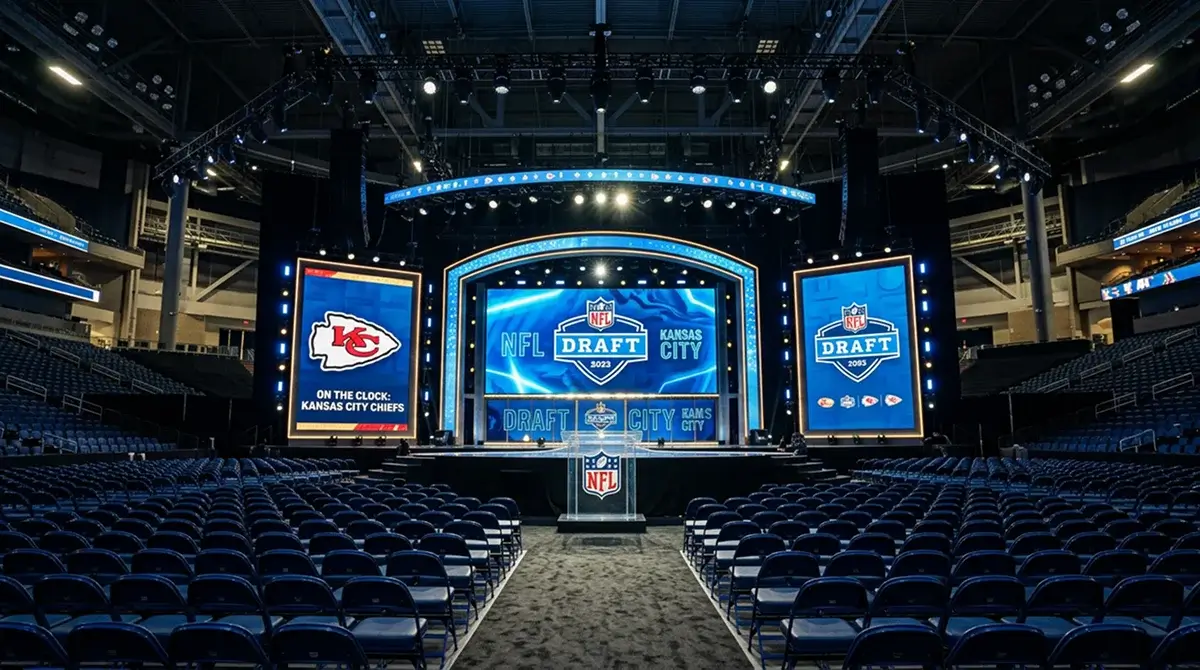
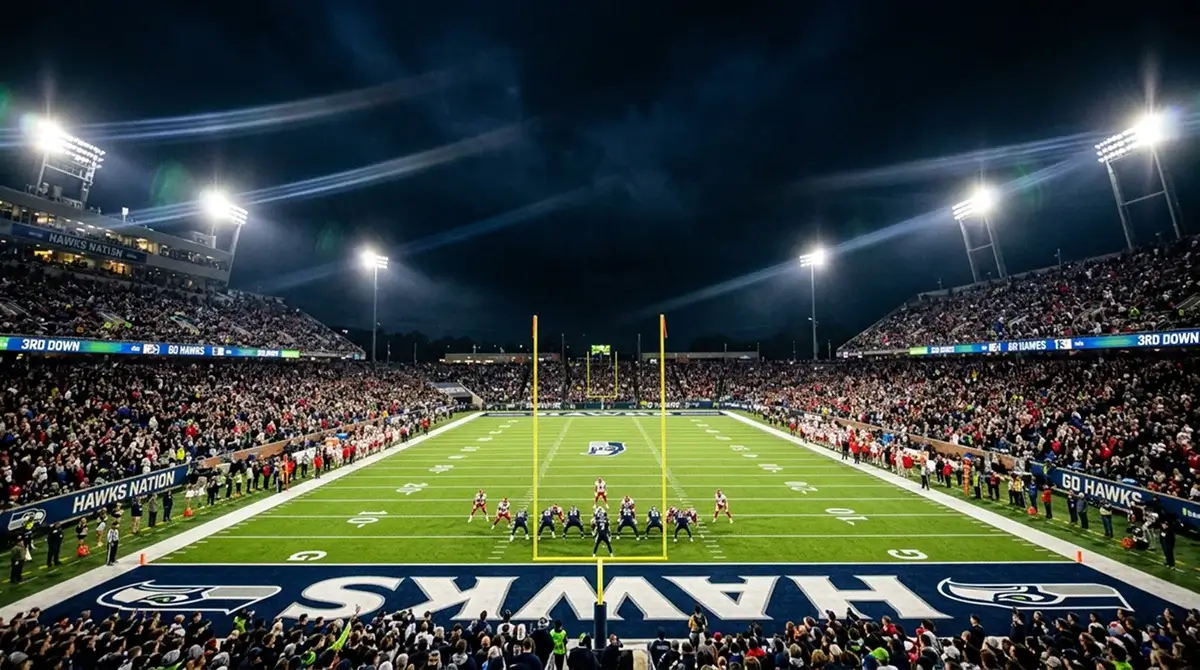
The explosion is not accidental. The NFL has invested heavily in the UK market — three London games in 2025, record television audiences, a fanbase that skews young and digitally engaged. American Gaming Association president Bill Miller put it plainly: legal sports betting enhances the fun and friendly competition that make NFL games and traditions even more special. That sentiment resonates differently on this side of the Atlantic, where we have had regulated wagering for decades, but the product — the american football itself — is still relatively new to most punters.
This guide exists because I kept running into the same gap. UK betting content about the NFL tends to fall into one of two traps: either it is a thinly disguised promotional page for a single sportsbook, or it is a beginner’s explainer that never graduates beyond “a touchdown is worth six points.” Neither serves the punter who already knows what a handicap is from years of Premier League betting but wants to understand why NFL spread markets behave differently, what the actual hold rates look like, or how the regulatory landscape in Britain affects the odds on offer.
I have built this guide around data — market sizing, regulatory filings, audience research, wagering volumes — because data is the one thing consistently absent from the top-ranking NFL betting content in the UK. Every claim I make here is grounded in verifiable figures, and every strategy I outline has been tested across multiple NFL seasons. Whether you are placing your first gridiron wager or recalibrating an existing approach, the framework is the same: understand the market, know the maths, respect the variance.
The NFL Betting Market in Numbers
I spend the first week of every September doing the same thing: pulling the latest market data before the NFL season kicks off, because last year’s assumptions are worthless. The numbers for the 2025-26 cycle stopped me mid-scroll. The global american football betting market hit $8.52 billion in 2025 and is on track for $9.5 billion in 2026 — a compound annual growth rate of 11.5% that outpaces nearly every other single-sport wagering category. By 2030, projections put the figure at $14.49 billion. These are not speculative venture-capital forecasts; they are built on actual handle data from regulated markets.
$30 Billion
Legal handle on the 2025 NFL season — up 8.5% from the prior year’s revised $27.6 billion
$165.58 Billion
Total regulated US sports betting handle in 2025, with a 10.15% hold rate yielding $16.80 billion in gross gaming revenue
$4.86 Billion
UK online sports betting revenue in 2025, projected to reach $5.69 billion by 2029
The American side of the equation is staggering. Total regulated sports betting handle in the United States reached $165.58 billion in 2025, generating $16.80 billion in gross gaming revenue at a 10.15% hold rate. That hold rate matters to you as a UK punter — it tells you how much the sportsbooks retain, on average, from every pound wagered. The NFL drives a disproportionate share of that volume. The American Gaming Association estimated the legal handle on the 2025 NFL season at $30 billion, an 8.5% jump from the revised $27.6 billion figure for the prior year. To contextualise: that single-sport seasonal handle exceeds the entire annual gross gaming yield of several European countries combined.
The AGA projected a record $1.76 billion in legal wagers on Super Bowl LX alone — a single game generating more handle than many UK sportsbooks see across an entire football season.
On the UK side, the numbers are equally telling. The British sports betting market generates approximately GBP 16.8 billion in annual gross gaming yield, with the online sector growing at a healthy clip — remote GGY rose 8% year-on-year to GBP 1.42 billion in the second quarter of 2025. UK online sports betting revenue is forecast at $4.86 billion for 2025, climbing to $5.69 billion by 2029. AGA president Bill Miller captured the trajectory during the association’s state-of-the-industry address: record revenues and tax contributions demonstrate the broad appeal of regulated gaming markets.
What these figures tell me, as someone who analyses cross-Atlantic odds for a living, is that the american football betting market is no longer a niche within a niche. It is a structurally significant segment of both the US and UK wagering ecosystems. The capital flowing through NFL markets means tighter lines, more liquid prop markets, and better odds for punters who know where to look. But it also means the sportsbooks are getting sharper — the days of soft NFL lines on UK platforms are fading. Understanding the market’s scale is not an academic exercise; it directly informs where and when you place your bets.
Why the NFL Is Britain’s Fastest-Growing Sport for Punters
The first time I walked into Wembley for an NFL game, the thing that struck me was not the spectacle on the field — it was the crowd. Eighty thousand people who knew the difference between a play-action pass and a draw play, chanting defensive formations, wearing jerseys from thirty-two different teams. That was years ago. The fanbase has only accelerated since.
More than 13 million people in the United Kingdom now identify as NFL fans, and the demographic profile matters for betting: 68% of those fans fall into the 18-44 age bracket, the cohort most likely to engage with online sportsbooks. This is not a sport watched primarily by older demographics who wager at high-street shops. It is a digitally native audience, and the sportsbooks have noticed.
Average attendance at NFL games in London consistently exceeds 80,000 — higher than the average gate at NFL stadiums in the United States. The Rams-Jaguars matchup at Wembley in 2025 drew 86,152 spectators.
Viewership
Over 6 million viewers watched the London NFL games on TV and online in 2025 — a record for international fixtures. Across all broadcasts, the NFL averaged 18.6 million viewers per game in 2025, up roughly 8% from the prior season.
Fanbase Reach
The UK accounts for approximately 3% of the NFL’s global web audience — a larger share than Germany, despite a smaller population. Kansas City Chiefs lead UK search interest at 9.5%, followed by the Philadelphia Eagles and San Francisco 49ers at 6.3% each.
Economic Impact
Each NFL game in London generates an estimated GBP 6.1 million in economic impact for the city, and the league staged a record 7 international games in 2025, three of them in London.
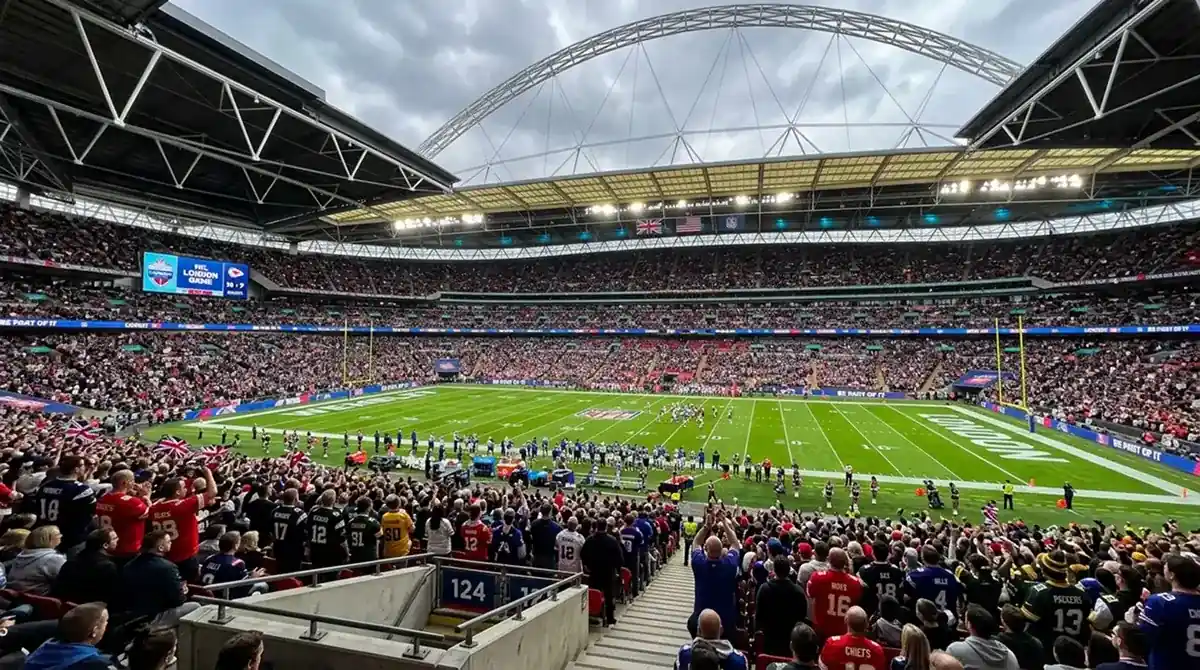
NFL commissioner Roger Goodell has called international expansion the greatest opportunity for growth, and the numbers justify the ambition. The league plans to push the international game count to 16 within the next five years, potentially across 16 different markets. For UK punters, this expansion is not just a spectator story — it is a betting story. More games on British soil mean earlier kickoff times, broader live-betting windows, and sportsbooks competing harder for NFL handle. Goodell told CNBC that markets outside the US are very attractive and that the league has strong coverage, a signal that London’s status as the NFL’s primary international hub is secure for the foreseeable future.
The betting implications are direct. A growing, young, engaged fanbase means UK sportsbooks invest more in NFL market depth. Five years ago, you were lucky to find player prop markets on a UK platform for a regular-season game. Now, prop bets on passing yards, rushing attempts, and receiving targets are standard across most licensed operators. The growth of the sport drives the growth of the market, and the growth of the market creates better conditions for informed punters.
Core Bet Types in American Football
A mate who has bet on Premier League football for fifteen years once told me NFL betting looked like “a different language.” He was half right. The bet types are largely the same — match result, handicap, totals — but the terminology and the dynamics of each market differ enough to trip up even experienced punters. The point spread is the single most popular bet type in american football wagering, a dominance that has no real parallel in association football where match result and both-teams-to-score rule the day.
Three markets form the backbone of every NFL betting card. Understanding how they work, and how they relate to one another, is the prerequisite for everything else in this guide.
Moneyline — a straight bet on which team wins the game, with no handicap applied. Odds reflect the implied probability of each outcome. The favourite carries shorter odds; the underdog pays more. Simple to understand, but the pricing on heavy favourites can be brutally inefficient.
Point Spread — the bookmaker assigns a handicap to equalise the perceived difference between two teams. The favourite must win by more than the spread; the underdog must lose by fewer points than the spread (or win outright). If you have used Asian handicap markets in football, the concept translates directly — the numbers just tend to be larger because NFL scores are higher. This is where the sharpest money in american football betting concentrates, and understanding how spread lines are set and how they move is essential to finding value.
NFL margins cluster on 3 and 7 because of how the sport scores, and that clustering is the one structural feature Premier League handicaps do not have. This models the full margin distribution with that clustering built in, converts the spread into a fair moneyline, and prices every half point either side of the posted line so you can see exactly which ones are worth buying.
| Selection | Model | Fair odds | Offered | Edge |
|---|
| Favourite line | Covers | Push | Fair odds |
|---|
How it works. Winning margins are modelled as a normal curve centred on the spread, with a standard deviation near 13.5 points that scales with the game total, then reweighted so that the margins NFL scoring actually produces are properly represented. Three and seven get the largest lift, six, ten and fourteen a smaller one, and the awkward margins in between are pulled down. Calibrated on a pick-em game the model puts a three-point margin at about 15% and a seven-point margin at about 10%, which is where the real distribution sits. Fair odds account for pushes on whole-number lines. More in the guides to point spreads and moneyline betting.
Estimates only. The model prices the shape of NFL scoring, not this specific matchup, and it knows nothing about injuries, weather or a backup quarterback. A spread bet at 10/11 needs to land 52.4% of the time to break even. 18+ — please gamble responsibly. Free, confidential support at BeGambleAware.
Totals (Over/Under) — a wager on whether the combined final score of both teams will be over or under a number set by the sportsbook. Totals ignore which team wins and focus entirely on the scoring volume. Weather, pace of play, and defensive matchups drive these lines far more than public perception, which is precisely why totals markets often present better value than spread or moneyline.
| Feature | Moneyline | Point Spread | Totals |
|---|---|---|---|
| What you predict | Which team wins | Margin of victory relative to handicap | Combined score above or below a line |
| UK equivalent | Match result (1X2 without draw) | Asian handicap | Over/under goals |
| Typical odds range | Wide (1/8 to 10/1+) | Near even (10/11 each side) | Near even (10/11 each side) |
| Best suited for | Strong opinions on outright winner, underdog spots | Margin analysis, handicap specialists | Statistical modellers, weather-aware punters |
| Where sharp money goes | Selective — mainly underdogs | Primary market for professional bettors | Secondary market, but growing |
Example: Week 6 — Team A vs Team B
Suppose Team A is a 6.5-point favourite at home. The sportsbook offers:
- Moneyline: Team A 2/7 | Team B 3/1
- Spread: Team A -6.5 at 10/11 | Team B +6.5 at 10/11
- Total: Over 47.5 at 10/11 | Under 47.5 at 10/11
At a GBP 10 stake, backing Team B on the moneyline returns GBP 40 (GBP 30 profit) if they win outright. Backing Team B +6.5 on the spread returns GBP 19.09 (GBP 9.09 profit) if they lose by six or fewer, or win. The spread bet wins more often; the moneyline bet pays far more when it does. That trade-off is the central tension in NFL betting.
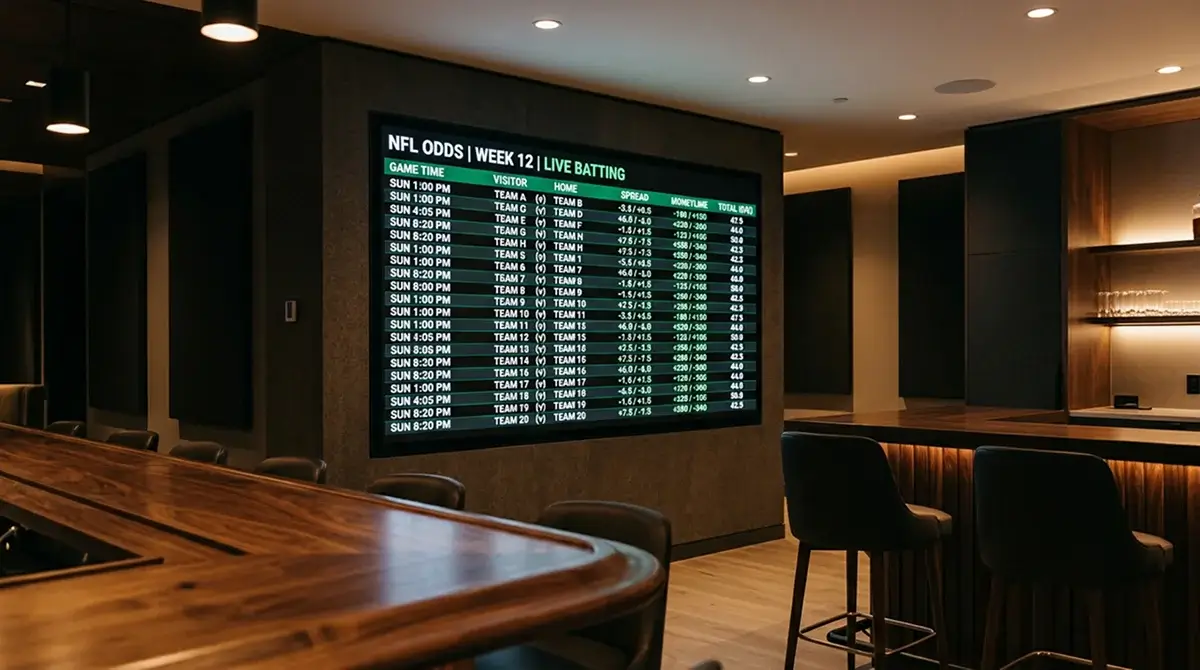
Beyond these three pillars, american football betting expands into accumulators (parlays), in-play markets, futures, teasers, and an increasingly deep player prop ecosystem. Each of those branches grows from the trunk of moneyline, spread, and totals — so if you lock in the mechanics of these three, the rest follows logically.
Reading NFL Odds as a UK Bettor: Fractional, Decimal, and American
The first time I saw American odds — those plus and minus numbers plastered across US sportsbook screens — I genuinely thought the website was broken. Negative numbers as prices? It felt like someone had redesigned the entire concept of probability just to be difficult. In reality, all three formats express the same thing: implied probability and potential return. The trick is learning to convert fluently, because NFL content from the US defaults to American format, and your UK sportsbook likely defaults to decimal or fractional.
Fractional odds are what most British punters grow up with. An NFL underdog priced at 5/2 means you receive GBP 5 in profit for every GBP 2 staked, plus your stake back. The total return on a GBP 10 bet at 5/2 is GBP 35. Decimal odds express the same information as a single multiplier: 5/2 fractional equals 3.50 decimal. Multiply your stake by the decimal figure and you get the total return. Most UK sportsbooks default to decimal these days, and for NFL betting specifically, I find decimal the clearest format for quick line comparison.
American odds are the format you will encounter in US-produced NFL analysis, podcasts, and line-movement trackers. They split into positive and negative figures. A positive number — say +200 — tells you how much profit a GBP 100 stake would yield (GBP 200 in this case). A negative number — say -150 — tells you how much you need to stake to win GBP 100 profit (GBP 150). The crossover point is even money: +100 in American equals 2.00 decimal equals 1/1 (evens) fractional.
Converting NFL Odds: A Practical Walkthrough
Suppose a US source lists an NFL team at -110 on the spread. To convert to decimal: divide 100 by 110 (the absolute value), then add 1. That gives you 1.909. In fractional terms, -110 is approximately 10/11. A GBP 11 stake at 10/11 returns GBP 21 (GBP 10 profit plus GBP 11 stake). The implied probability is 52.4%.
Now take an underdog at +260. Divide 260 by 100, then add 1. Decimal: 3.60. Fractional: 13/5. A GBP 10 stake returns GBP 36. Implied probability: 27.8%.
Quick Conversion Formulas
American negative to decimal: (100 / absolute value) + 1
American positive to decimal: (American odds / 100) + 1
Decimal to implied probability: (1 / decimal odds) x 100
Fractional to decimal: (numerator / denominator) + 1

Why does this matter beyond trivia? Because the best NFL analysis — the line-movement data, the sharp-money indicators, the closing-line value benchmarks — is published in American format. If you cannot read -3.5 (-105) at a glance and know it means a 3.5-point spread priced at roughly 1.952 decimal, you are operating with a lag. And in a market where lines move in minutes, lag costs money. I keep my default display set to decimal for placing bets, but I read US analysis in its native format without converting. After a few hundred repetitions, the translation becomes automatic.
Choosing a UK Sportsbook for NFL Markets
Every September, I open accounts at two or three new sportsbooks just to test their NFL market depth. Not for the welcome offers — for the odds. I want to know who is pricing player props tightly, who is leaving totals markets loose, and who is actually streaming Thursday Night Football through their platform. The difference between a sportsbook that treats the NFL as a token gesture and one that builds genuine market infrastructure is the difference between overpaying by two or three percentage points on every wager and getting a fair price.
Roughly 10% of the UK population actively bets on sport online, and 76% of young adults aged 18-24 use their mobile phone to do it. That mobile-first behaviour means the quality of an NFL sportsbook's app — speed of live-odds updates, bet builder functionality, ease of navigating deep prop markets — matters as much as the odds themselves. A sportsbook might offer the tightest spread lines in the industry, but if the app crashes during a fourth-quarter drive when you are trying to place a live bet, that pricing advantage is academic.
Do
- Compare overround (margin) on NFL spread markets across three or more sportsbooks before the season starts — a 1-2% margin difference compounds over hundreds of bets
- Test the live-betting interface during preseason games when the stakes are low and your mistakes are cheap
- Check whether the sportsbook offers player prop markets for every regular-season game, not just primetime fixtures
- Verify UKGC licensing before depositing — this is non-negotiable for regulatory protection
Don't
- Choose a sportsbook based primarily on the welcome offer — the value of an initial free bet is dwarfed by the cumulative cost of wider margins over a season
- Assume all UK sportsbooks price NFL markets with the same depth — some offer three bet types per game, others offer sixty-plus
- Ignore cash-out terms — partial cash-out on NFL accumulators varies wildly between platforms
- Stick with a single sportsbook out of loyalty — line shopping is the simplest edge available to any punter
Market Depth
How many individual markets does the sportsbook offer per NFL game? Premium platforms list 50+ markets including player props, team props, quarter lines, and alternates.
Odds Margin
The overround on NFL spread markets typically ranges from 4% to 8% on UK platforms. Lower is better. Even a 2% difference per bet adds up to hundreds of pounds over a full season.
Live Betting Quality
Speed of odds updates, range of in-play markets, and reliability during high-traffic moments like scoring plays. Test before committing real stakes.
I maintain active accounts at five UK sportsbooks specifically for NFL betting. Not because I enjoy juggling logins, but because line shopping — comparing prices across platforms before placing a bet — is the closest thing to a guaranteed edge in this market. The strategy section below breaks down exactly how that works in practice.
Bankroll Management Fundamentals for NFL Bettors
Here is a number that should be tattooed on the wrist of every NFL bettor: 10.15%. That was the average hold rate across all regulated US sports betting in 2025 — the percentage of total handle retained by the sportsbooks. In plain terms, for every GBP 100 wagered across the market, the house kept GBP 10.15 on average. Your job as a punter is to be on the right side of that equation, and bankroll management is the mechanism that keeps you in the game long enough for your edge — however slim — to manifest.
The NFL season is a marathon, not a sprint. Seventeen regular-season weeks, plus a postseason that stretches into February. Variance is real and unforgiving: a 55% win rate on spread bets is elite-level performance, and even at that clip, losing streaks of six or seven consecutive bets are statistically inevitable over a full season. If your staking plan cannot absorb those drawdowns, your analytical skill is irrelevant because you will be broke before the playoff picture clarifies.
Calculating Stake Size: Percentage Model
Suppose you allocate a bankroll of GBP 1,000 for the NFL season. Using a 2% staking model, each individual bet is GBP 20. After a losing week where you go 1-4, your bankroll drops to GBP 940. Your next bet recalculates: 2% of GBP 940 is GBP 18.80. The stake shrinks proportionally, slowing the rate of loss. Conversely, after a winning week that pushes the bankroll to GBP 1,120, your stake rises to GBP 22.40 — compounding gains without increasing risk as a percentage of your capital.
After ten weeks, even with a perfectly average 50% hit rate on spread bets at -110 (10/11), your bankroll will have eroded slightly due to the vig. At a 52% hit rate — a modest but genuine edge — the percentage model keeps you solvent through the cold streaks and allows compound growth during the hot ones.
The hold rate is the house's edge, not yours. That 10.15% average includes recreational bettors who chase parlays and novelty markets. On NFL spread and totals — the markets where informed punters concentrate — the effective hold is closer to 4-5%. But it is still negative expectation for the majority. If you do not have a quantifiable reason to believe your win rate exceeds the breakeven threshold (approximately 52.4% at -110), you are gambling, not betting. Bankroll management does not create an edge — it protects the edge you have built through analysis.
I use a flat 1.5% staking model for NFL spread bets and a separate, smaller allocation (0.5-1%) for higher-variance prop and accumulator wagers. The separation is important: mixing your spread-betting bankroll with your parlay bankroll is a fast track to distorted risk perception. Treat them as distinct accounts, even if they sit within the same sportsbook balance. The maths of drawdown and recovery are unforgiving, and I have lost count of the number of promising NFL bettors I have watched blow up their bankroll in Week 8 because they chased a bad run of spread results with oversized accumulator stakes.
Strategy Snapshot: Where UK Punters Find Value
Everything up to this point — market data, bet types, odds formats, sportsbook selection, bankroll discipline — is infrastructure. Necessary, but not sufficient. The question that actually pays the bills: where does value hide in NFL markets, and how do UK punters specifically exploit it?
Player prop bets have been the fastest-moving frontier in american football betting over the past three seasons. The growth is measurable: in some cases, the volume of wagers on a single player's touchdown market has exceeded the volume on that same game's point spread. That kind of liquidity shift tells you something important — the sportsbooks are still calibrating their prop-market pricing, and calibration periods create opportunity. When I first started analysing NFL props from a UK perspective, the lines were noticeably softer than the equivalent spread markets. They have tightened since, but the sheer number of player prop markets on offer means inefficiencies persist across the board.
Bill Miller of the American Gaming Association has noted that fans have more ways than ever to responsibly engage with the game through legal betting. The flip side of that statement, from a punter's perspective, is that more markets mean more places for the sportsbook to misprice. A spread line on a marquee Sunday game will be razor-sharp by kickoff — thousands of sharp bettors have hammered it into efficiency. But the third-string running back's rushing yardage prop in the same game? That line might be set by an algorithm with limited data, and if you have done the matchup work, you have an informational edge the model has not priced in.
Do
- Focus on closing line value (CLV) as your primary performance metric — beating the closing line consistently is the strongest indicator of long-term profitability, stronger than win rate
- Shop lines across at least three UK sportsbooks for every bet — the price difference on NFL props between platforms is routinely 10-15% in implied probability terms
- Track schedule-based edges: teams on short rest, cross-country travel, and post-bye-week performance patterns all produce measurable deviations from the line
- Specialise — the punter who knows everything about one division's offensive tendencies will outperform the generalist who follows the entire league superficially
Don't
- Chase steam moves after the line has already shifted — by the time you see sharp action reported on social media, the value is gone
- Assume that public underdogs are always value — the "fade the public" heuristic works only in specific situational spots, not as a blanket strategy
- Ignore the vig when calculating your expected return — a bet at 10/11 needs to win 52.4% of the time just to break even, and most punters overestimate their edge
- Treat accumulators as a strategy rather than entertainment — the compounding vig on multi-leg parlays makes long-term profitability from accumulators mathematically hostile

The honest truth about NFL betting strategy is that it rewards patience more than brilliance. A 2-3% edge on your selections, applied consistently over a full season with disciplined staking, produces meaningful returns. A 10% edge applied recklessly, with erratic bet sizing and emotional chasing, produces nothing. The UK market is mature enough that the infrastructure — multiple licensed sportsbooks, competitive odds, deep markets — supports a professional approach. Whether you bring the discipline to match is a different question entirely.
UK Gambling Regulation and What It Means for NFL Bettors
In April 2025, I woke up to a notification from one of my sportsbook accounts asking me to complete a financial affordability check. Not because I had deposited an unusual amount — because the regulatory threshold had just dropped from GBP 500 to GBP 150 in net deposits over a rolling 30-day period. The Gambling Commission had quietly redrawn the lines, and the practical impact on NFL bettors was immediate. If you are placing weekly wagers across multiple games throughout the season, GBP 150 in monthly deposits is a threshold you will hit before the Week 3 Sunday slate.
Key Regulatory Framework
All sports betting in the United Kingdom operates under the Gambling Act 2005, as amended by the reforms outlined in the 2023 White Paper and subsequent statutory instruments. The Act established the UK Gambling Commission (UKGC) as the independent regulator with authority to license, monitor, and sanction operators. Every sportsbook you use for NFL betting must hold a valid UKGC operating licence — no exceptions. The Commission's own business plan for 2026-2027 states that the licensed gambling market in Great Britain is one of the most respected in the world, built on an unwavering focus on making gambling safer, fairer, and crime-free.
The 2025 regulatory cycle brought three changes that directly affect how UK punters interact with NFL betting markets. First, a statutory gambling levy took effect on 6 April 2025 — a mandatory percentage of gross gaming yield that operators now pay directly to the Gambling Commission. This replaces the previous voluntary funding arrangements and guarantees a stable revenue stream for research, prevention, and treatment of gambling-related harm. The cost of the levy is borne by operators, but in practice, it translates into marginally tighter odds across the board as sportsbooks adjust their pricing to maintain profitability.
Second, the online stake limits: from 9 April 2025, the maximum stake per spin on online slots was capped at GBP 5 for customers aged 25 and over, and GBP 2 for those aged 18-24. These limits apply specifically to slots, not to sports betting, but they signal the direction of regulatory travel. The Gambling Commission has been explicit that further consumer-protection measures are under review, and sports betting staking limits have been discussed — though not yet implemented.
Financial Risk Assessment Thresholds
As of 2025, sportsbooks are required to initiate financial risk checks when a customer's net deposits reach GBP 150 within a 30-day rolling period. This threshold was lowered from GBP 500 in January 2025. The checks are designed to identify affordability risks but can result in temporary account restrictions, deposit limits, or requests for documentation. For NFL bettors who spread their action across a full season, awareness of this trigger point is essential for managing account access.
Third, enforcement has teeth. The Gambling Commission extracted GBP 13.4 million in fines and regulatory settlements from non-compliant operators in the 2023-2024 reporting period. HM Treasury approved an additional GBP 26 million in funding over three years for the Commission's efforts to combat unlicensed gambling — a response to the troubling growth of the UK's black market, which swelled to an estimated GBP 16.6 billion in 2025, nearly triple the GBP 5 billion figure from 2019. Grainne Hurst, CEO of the Betting and Gaming Council, described the situation bluntly: record-breaking figures underline the industry's ongoing commitment to raising standards while ensuring millions of people who enjoy a regular flutter do so safely and responsibly.
For NFL bettors, the regulatory environment is both a protection and a constraint. UKGC licensing ensures that your funds are segregated, your bets are settled fairly, and you have recourse if something goes wrong. The affordability checks can be an inconvenience, but they exist for a reason — and understanding the thresholds in advance means you can plan your deposit schedule accordingly rather than being caught off guard mid-season.
Responsible Gambling Resources for NFL Punters
I have watched sharp, analytical NFL bettors — people who build their own models, track every wager, approach the sport with genuine rigour — still fall into patterns that damage their wellbeing. The length of the NFL season is part of the problem. Seventeen regular-season weeks, followed by playoffs, followed by the Super Bowl, followed by draft-season futures. There is almost no off-switch. And the behavioural data confirms the risk: 15% of men and 4% of women in the UK engage in sports betting, with 95% of online wagers placed from the home environment. The absence of a physical barrier between your sofa and your sportsbook account is a design feature that requires conscious management.
The scale of unlicensed gambling in the UK — discussed in the regulation section above — is a stark reminder that the regulated ecosystem exists to protect punters. Using a UKGC-licensed sportsbook is not just a legal formality; it is your access point to a suite of tools specifically designed to help you stay in control.
Key Resources
GamStop is the UK's national self-exclusion scheme — registering blocks you from all UKGC-licensed online gambling sites for a period of your choosing (six months, one year, or five years). Every licensed sportsbook operating NFL markets is required to participate. Beyond GamStop, individual sportsbooks offer deposit limits, loss limits, session time limits, reality checks (pop-up notifications at set intervals), and cooling-off periods. The UKGC website maintains a directory of support organisations including GamCare (0808 8020 133) and the National Gambling Helpline.
Before You Place an NFL Bet This Week
- Have I set a weekly deposit limit on every sportsbook I use?
- Am I betting with money I can afford to lose entirely, separate from my household budget?
- Am I placing this bet based on analysis, or am I reacting emotionally to last week's result?
- Have I checked whether my total deposits this month are approaching the GBP 150 financial-risk-assessment threshold?
- Have I taken at least one full week off from NFL betting in the past month?
- Do I know the exact amount I have won or lost this season, without checking my records?
If any of those questions give you pause, take it seriously. The NFL season will still be there next week. No single bet, no single game, no single Sunday slate is worth compromising your financial or mental health. I include this section not as a regulatory obligation but as a practical commitment: this guide is built on the assumption that betting on american football is a form of informed entertainment, and entertainment stops being entertaining the moment it becomes compulsive.
Frequently Asked Questions About American Football Betting
How does NFL point spread betting work?
The sportsbook assigns a points handicap to the favoured team. If a team is listed at -6.5, they must win by 7 or more points for a spread bet on them to pay out. Conversely, backing the underdog at +6.5 means your bet wins if that team loses by 6 or fewer points, or wins outright. The spread is designed to create a roughly 50/50 market, with both sides priced near even money (typically 10/11 on UK sportsbooks). The concept maps directly to Asian handicap betting in football — the main difference is the scoring scale. NFL scores are higher, so spreads of 3, 7, and 10 are the most common key numbers, compared to the 0.5 and 1.0 handicaps prevalent in Premier League markets.
What is the difference between moneyline and spread in NFL betting?
A moneyline bet asks only which team wins — no handicap, no margin requirement. The spread introduces a points adjustment that the favourite must overcome. The practical difference is risk versus reward. Moneyline odds on heavy NFL favourites can be as short as 1/8, meaning you risk GBP 80 to win GBP 10. The spread on that same game might be -14.5 at 10/11, offering a near-even payout but requiring the favourite to win by 15 or more. Moneyline bets on underdogs offer bigger payouts but hit less frequently. Spread bets on either side offer consistent pricing but demand accuracy on the margin. Most experienced NFL bettors use both, selecting moneyline for strong underdog opinions and spread for games where the margin analysis gives them an edge.
Can I legally bet on American football in the UK?
Yes. Sports betting, including wagers on all NFL and american football markets, is fully legal and regulated in the United Kingdom under the Gambling Act 2005. You must use a sportsbook licensed by the UK Gambling Commission (UKGC), be aged 18 or over, and comply with the identity verification and affordability checks that licensed operators are required to conduct. All major UK sportsbooks offer NFL markets throughout the season, including preseason, regular season, playoffs, and the Super Bowl.
What are the best NFL betting markets for beginners?
Start with moneyline and totals (over/under). Moneyline is the simplest — pick the winner, collect if you are right. Totals require you to assess whether a game will be high- or low-scoring, which you can do with basic research into team offensive and defensive rankings. Point spreads are the natural next step once you are comfortable with the scoring dynamics of the sport. I would advise beginners to avoid player props and accumulators until they have at least one full season of tracked results on the simpler markets. The complexity of prop pricing and the compounding vig on accumulators punish inexperience disproportionately.
How do NFL odds differ from Premier League football odds?
The most visible difference is the absence of a draw. NFL games cannot end in a tie during the regular season (except in rare overtime scenarios), so the match-result market is two-way rather than three-way. This changes the odds structure fundamentally — there is no draw dividend to distribute, so moneyline prices tend to be more efficient. Spread markets in the NFL also behave differently from Asian handicaps in football because NFL scoring is discrete and clustered around specific numbers (3 and 7, primarily), creating "key number" effects that do not exist in a sport where 1-0 and 2-1 are common scorelines. Overrounds on NFL markets tend to be tighter than on many Premier League fixtures, particularly on major games.
What is an NFL accumulator and how does it work?
An accumulator — called a parlay in American terminology — combines multiple selections into a single bet. All legs must win for the bet to pay out. The odds multiply, so a four-leg accumulator with each selection at 10/11 pays significantly more than four individual bets. The trade-off is brutal: adding legs increases the sportsbook's effective margin exponentially. A two-leg acca at standard NFL spread odds gives the house roughly an 8% edge; a six-leg acca pushes that beyond 30%. Accumulators are entertaining and occasionally spectacular, but they are not a sustainable strategy. If you do bet accas, keep the stakes small and the legs correlated where possible — for example, backing two teams playing each other's division rivals, where outcomes are more likely to move together.
When is the best time to place NFL bets during the season?
It depends on the market. For weekly spread and totals, the optimal window is typically early in the week — Tuesday or Wednesday — when opening lines are posted and before the majority of public money arrives to move the price. Sharp bettors often act early to capture the best number before the line shifts. For Super Bowl and conference futures, the best value tends to appear in the preseason or very early in the regular season, before the market fully prices in emerging team quality. Live betting is inherently situational — the value depends on in-game events, and the best in-play opportunities appear after significant scoring plays or momentum shifts when the sportsbook's algorithm overreacts. There is no universal "best time"; there is only the time when the line does not yet reflect all available information.
Created by the ”American Football Betting” editorial team.